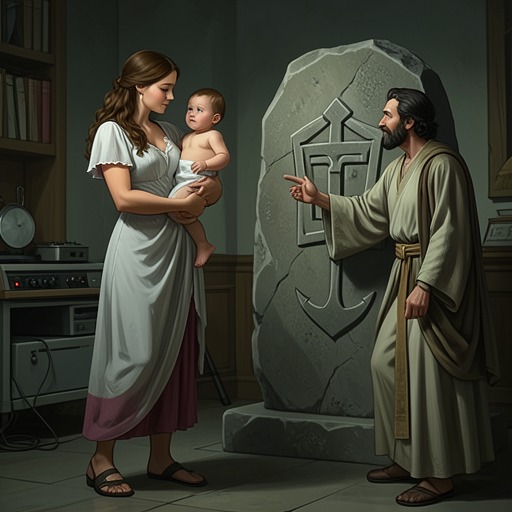
Death of Queen Triss
Bride of AlvarDeath of Queen Triss is the central tragedy of Alvar’s early reign and the event that turns his Cursed nature from a private burden into a source of irreversible loss. Triss, Alvar’s first queen, died while pregnant, together with their unborn child, after the pregnancy’s magical complications overwhelmed her body. Her death became the wound around which Alvar built his guilt, his fear of intimacy, and his later insistence that Lucy would not suffer the same fate.
Background and Marriage
Triss became Alvar’s wife after the war ended, when Alvar was appointed king. Their marriage lasted only a single year before tragedy struck. The kingdom remembered her not merely as a former queen but as a beloved figure whose death, along with the death of her baby, left Alvar and the whole kingdom in mourning. Grey later identifies her to Lucy as Alvar’s first queen and explains that she died during pregnancy, revealing a part of the king’s history that Alvar had never told Lucy himself.
The circumstances of Triss’s pregnancy are connected to the difference between ordinary human bodies and Cursed blood. Triss had no Cursed blood, while Alvar carried the Curse. Alvar later admits that he did not understand how a Cursed pregnancy worked when he and Triss conceived their child. The danger was therefore not presented as an ordinary pregnancy complication alone: the physician recognizes that something magical and dark is consuming Triss’s strength, while the unborn child’s development becomes fatal to its human host.
The Pregnancy and Death
The crisis unfolds through waiting, medical uncertainty, and the steady collapse of hope. A physician eventually approaches Alvar with the grim assessment that nothing can be done. The condition is described as abnormal and magical, brought on by a dark Curse rather than by a familiar pregnancy difficulty. Triss is already sallow and drained of life when Alvar enters the room they shared, and the baby is portrayed as eating away at her system because the Curse does not tolerate an average human host.
Alvar responds by promising that he will find a way to save her. He kneels beside the bed and holds her cold hands, trying to convert love into treatment through sheer determination. Triss, however, understands the situation differently. She tells him not to blame himself and suggests that he has already saved her, turning the language of rescue away from physical survival and toward the love and acceptance they shared. Her words provide emotional consolation, but they do not prevent her death or the loss of the child.
The event is therefore both a medical catastrophe and a crisis of interpretation. Alvar’s healing abilities had once saved Lucy while she was still in her mother’s womb, and his people possess powers capable of causing healing. Yet those powers cannot reverse the reproductive danger created when Cursed blood enters an ordinary human pregnancy. The contrast makes Triss’s death especially important: healing exists in this world, but it is neither universal nor sufficient to cancel the bodily limits imposed by the Curse.
Alvar’s Guilt and Later Revelation
Alvar eventually accepts direct responsibility for Triss’s death. He tells Lucy that Triss died because of him, explaining that she had not carried even a drop of Cursed blood and that he destroyed her by getting her pregnant. He calls himself a fool for not knowing how Cursed pregnancies functioned. His confession does not erase the coercive and supernatural forces involved, but it shows how completely he has internalized the loss as a personal moral failure.
That guilt shapes Alvar’s conduct long after Triss’s death. He keeps the history of his first marriage from Lucy, allowing her to discover that he is a widower through Grey rather than through the king himself. The omission is not treated as simple forgetfulness: Lucy is shocked that Alvar has concealed both his wife and his child, while Alvar’s later explanation reveals how deeply shame and grief have organized his silence. His inability to speak about Triss becomes part of the emotional distance surrounding his relationship with Lucy.
Alvar also researches the danger so that the tragedy will not be repeated. He consults multiple record keepers, including Father Ryland, described as the kingdom’s greatest keeper of magical secrets, and concludes that Lucy would not die from bearing his children. He remains uncertain whether every child would be Cursed, but he now understands that the reproductive risk differs according to the mother’s condition. The research becomes a belated attempt to transform grief into knowledge and to make future love safer than his first marriage had been.
Political and Ethical Consequences
Triss’s death complicates Alvar’s position as king because it joins private bereavement to dynastic expectation. Underland places severe importance on tradition, honor, respect, and lineage, and a monarch’s marriage and heirs are therefore political matters as well as intimate ones. Her death removes the queen and the expected child in the same stroke, leaving Alvar to carry both the kingdom’s mourning and the implications of a damaged succession.
The tragedy also becomes part of the larger question of whether Alvar is a person afflicted by a condition or a monster defined by it. Alvar later describes himself as a scourge to everyone he loves and fears that there is nothing good inside him. That self-condemnation exists alongside evidence that he has repeatedly been treated as less than human: his family rejected him after discovering the Curse, Saul enslaved him with a Fe collar, and Saul forced him to commit violence. The death of Triss is different because Alvar regards it as an intimate failure that occurred before he understood the danger, yet the resulting guilt makes him interpret his condition as proof of inherent evil.
His later public confession preserves this moral tension. Alvar tells Underland that he was enslaved by Saul and that his actions under the Fe collar were not freely chosen, but he does not use coercion to make himself innocent of every consequence. Triss’s death remains the private precedent behind his fear that those closest to him will pay for the Curse. The event thus separates responsibility from simple intention: Alvar did not knowingly seek Triss’s death, but he continues to bear its memory as if love itself had become a form of danger.
Narrative Significance and Legacy
Death of Queen Triss functions as the backstory that explains Alvar’s guardedness, his resistance to trust, and his urgency when Lucy’s life is threatened. It is also a repeated counterpoint to Lucy’s survival. Alvar once saved Lucy through his Cursed blood when she was dying in the womb, and later gives her his Cursed blood again when she is near death. The same blood that is associated with Triss’s fatal pregnancy is therefore also associated with rescue, making the Curse morally and medically unstable rather than simply evil.
The event’s deepest significance lies in the way it changes the meaning of Alvar’s future relationships. Triss’s death does not remain a closed historical fact; it returns whenever pregnancy, healing, blood, or the possibility of heirs is discussed. Alvar’s love for Lucy is shadowed by the memory of a queen he could not save, while his research and later attempts to protect Lucy show him trying to interrupt the pattern. Triss’s final reassurance that Alvar had already saved her cannot undo the loss, but it prevents the tragedy from being reduced entirely to destruction. Her death becomes the source of Alvar’s shame and caution, yet also the reason he seeks knowledge, accepts the burden of explanation, and acts to keep the woman he loves alive.